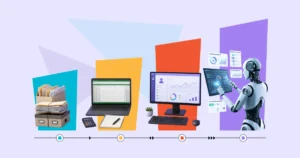

MoFu (Middle of the Funnel) is the stage of the sales funnel where you turn anonymous visitors into genuine potential customers. This is the point when a potential customer already knows they have a problem and starts actively looking for a solution. If your marketing stops at generating traffic while your sales team complains that the leads are “cold,” the problem often lies at this stage of the funnel. It is an area that requires particular attention in your marketing and sales strategy. In this article, you’ll learn exactly what MoFu is, how it works together with ToFu and BoFu, which content formats and metrics work best, and which mistakes to avoid so you don’t miss out on sales opportunities.
MoFu is the middle stage of the buying process, corresponding to the consideration phase. In other words, a potential customer is no longer an anonymous visitor — they know your brand, understand their problem, and are actively comparing the available solutions.
If ToFu is like casting a wide net into the sea, MoFu is a fishing rod — requiring precision, patience, and the right bait. Instead of competing for reach, this is where you build relationships and trust. At this stage, the user stops being a number in a report and becomes a person with specific questions, concerns, and a growing readiness to make a purchasing decision.
In practice, MoFu covers all marketing and sales activities focused on three key areas:
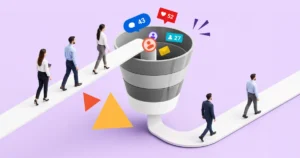
To better understand MoFu, it is important to look at it in the context of the full funnel. The ToFu, MoFu, BoFu model divides the customer journey into three stages, each with its own goals, content, and metrics. The terms ToFu, MoFu, and BoFu describe the specific characteristics of each stage of the overall process.
ToFu (Top of the Funnel) is the brand awareness stage. At this point, you focus on attracting the attention of potential customers who are only beginning to recognize a problem or need. Typical ToFu content includes blog articles, videos, and social media posts.
MoFu (Middle of the Funnel) is the consideration stage. The potential customer already knows what they are looking for and is evaluating the available options. Your task is to provide arguments that will convince them to stay with you rather than turn to a competitor.
BoFu (Bottom of the Funnel) is the decision stage. The potential customer is ready to buy or close to making a decision. Typical BoFu activities include sending offers, product presentations, trials, and sales conversations.
The boundaries between these stages are fluid. A potential customer may return to MoFu even after a sales meeting if new objections arise. That is why taking a consistent approach to the entire sales funnel is more important than optimizing one stage in isolation from the others.
If you want to explore all three stages in more detail and see how they work together, read the article: TOFU, MOFU, BOFU — Three Stages of the Sales Funnel That Determine Whether Traffic Turns into a Customer Base.
By the time they reach the MoFu stage, potential customers have already recognized the problem. They know that something needs to change. However, they are faced with a difficult choice among multiple options, often with limited time and significant pressure due to the risk of making the wrong decision.
Typical questions at the consideration stage include:
Content and communication at the MoFu stage should directly address these questions. Rather than trying to sell, they should help resolve doubts and concerns. A potential customer does not need another generic article about industry trends. They need concrete arguments that will help them justify their decision both to themselves and to their manager.
This is where marketing becomes a real support for sales: a well-informed customer reaches the salesperson with answers to at least some of their questions and concerns.
The middle of the funnel is where marketing and sales need to work as a single system. The problem is that in many companies, these two departments operate independently: marketing focuses on the number of contacts generated, while sales assesses their quality, and there is no consistent approach between the two.
A Marketing Qualified Lead (MQL) is a person who has shown clear engagement and is ready to be passed to the sales team — for example, they have downloaded an e-book, attended a webinar, or visited the pricing page multiple times. A Sales Qualified Lead (SQL) is a person who, after an initial assessment by a sales representative, has been deemed ready to discuss an offer.
In practice, the process works as follows:
Without a CRM system, this process is either manual and chaotic or does not exist at all. Leads get “lost” between marketing and sales, while potential customers wait too long for a response and lose interest.
A good CRM system is not just a contact database — it is a central tool for managing the entire MoFu process.
It enables you to:
Companies that effectively manage the middle of the funnel invest in advanced CRM systems and marketing automation tools. One technology partner supporting organizations in this area is SMART business — an experienced CRM and ERP systems implementation partner specializing in Microsoft Dynamics 365 solutions. With many years of experience in connecting marketing and sales processes within a single ecosystem, SMART business helps companies build a seamless flow of leads from the first touchpoint through to closing the sale.
MoFu content provides tangible value in exchange for engagement or contact details. Unlike ToFu content, which is usually freely available and does not require registration, MoFu content often requires users to provide an email address or other contact details. This is why it is so effective at turning interest into qualified sales leads.
Case studies: Concrete, data-backed evidence that your solution works. A good case study answers the question, “Who has already solved a similar problem?” and reduces the perceived risk of making a decision. The best examples describe the initial situation, the solution implemented, and measurable results.
Reports, expert analyses, and guides: In-depth analytical materials that position your company as an expert in the field. They require registration, allowing you to collect contact details and qualify the user as a potential sales lead. They work particularly well in B2B sales, where the decision-making process is lengthy and data-driven.
ROI calculators and interactive tools: These allow potential customers to calculate the return on investment (ROI) or total cost of ownership (TCO) of your solution themselves. They help address price objections and give sales representatives a concrete starting point for a conversation.
Webinars and live presentations: Formats that help build relationships and trust in real time. A MoFu webinar should answer specific questions and address objections — it should not be a sales presentation.
Regular educational newsletters: Regular communication is key to building lasting relationships. A good MoFu newsletter does not focus on direct sales but provides valuable knowledge. This keeps the company on the customer’s radar until they are fully ready to make a purchasing decision.
Email sequences: Automated series of messages that guide potential customers through the consideration stage step by step. Each message addresses one specific question or objection. Personalization based on behavior is key: someone interested in pricing should receive different messaging from someone who is just getting familiar with the topic.
Solution comparisons and comparison guides: Materials that show the differences between your offering and those of your competitors — objectively and based on facts. Potential customers will make this comparison anyway, so it is better to have some control over the process.
Customer references and reviews: Not only as an element of your website, but also as dedicated materials (video or written) featuring specific data and results. At the consideration stage, prospects look for confirmation that others have already trusted the company and are happy with their decision.
MoFu performance is measured differently from ToFu, where reach and traffic are analyzed, and from BoFu, where revenue and closed deals are the focus. In the middle of the funnel, the primary focus is on the quality of relationships and the effectiveness of lead qualification.
Marketing-to-sales lead conversion rate: The percentage of marketing-qualified leads that sales considers ready for a conversation. This is one of the most important indicators of collaboration between the two teams. A low rate means that marketing and sales have different definitions of a valuable lead.
Number and quality of leads generated through gated content: How many leads does your content generate? What is their profile — industry, company size, job title? Numbers alone are not enough: a lead from a small company and one from a large organization can have very different value.
Content engagement: Metrics showing that a potential customer is actively engaging with your content: the number of report downloads, webinar registrations, email open and click-through rates, and time spent on key pages.
Lead engagement level (lead scoring): A cumulative score reflecting a user’s activity. It helps automatically identify people who are ready for a sales conversation without manually analyzing every lead.
Time spent in the consideration stage: The average time from the first interaction (e.g. downloading a resource) to passing the lead to sales. An overly long process may indicate gaps in communication or a qualification threshold that is too high.
Response to follow-up: What percentage of customers respond to communication after downloading a resource? A low rate may indicate problems with timing, personalization, or content quality.
All this data is collected and brought together in one place — the CRM system. This is why technology is a foundation for effective management of the middle of the funnel, rather than simply an add-on.
Creating content for only one person involved in the buying process. In B2B sales, purchasing decisions are rarely made by a single person. A buying committee often consists of four to seven people with different roles and concerns — the end user asks about ease of use, the CFO about return on investment, and the IT director about security. If your MoFu content addresses the questions of only one of these people, the others will not have the arguments they need and may block the decision.
Moving to an offer too quickly. Sending a sales offer to someone who has just downloaded their first report means prematurely shortening the buying process. The potential customer is not yet ready to make a decision and may perceive this as too pushy and purely transactional. The result: unsubscribing, no response, and a lost sales opportunity.
Failing to follow up after a content download. Leaving a potential customer without further communication immediately after they download an e-book is one of the most common and costly mistakes. The moment someone downloads a resource is when their interest is at its peak. Failing to have a planned follow-up within 24–48 hours can often result in losing the lead you have worked to acquire.
No shared definition of a sales-ready lead. If marketing considers providing an email address enough, while sales expects someone with a specific need and budget, conflict is inevitable. Establishing clear qualification criteria is essential for effective collaboration between the two teams.
Lack of segmentation in communication. Sending the same messages to all potential customers — regardless of their behavior, industry, or funnel stage — means missing out on the potential of automation. Personalizing communication sequences increases both open rates and conversions.
MoFu (Middle of the Funnel) is the middle stage of the sales funnel, where a potential customer already understands their problem and actively compares available solutions before making a decision.
MoFu is the consideration stage, where a potential customer is still gathering information and evaluating their options. BoFu (Bottom of the Funnel) is the decision stage, where the customer is ready to buy and needs a specific offer, product presentation, or contact with the sales team.
ToFu (Top of the Funnel) focuses on building awareness and attracting a broad audience that is only beginning to discover its problem. MoFu is aimed at people who already understand the problem and are looking for the best solution.