
In the era of information overload and increased competition, the role of marketing is constantly growing. Ensuring market penetration, increasing customer loyalty, and maximizing profits are just some of the tasks facing marketing departments today. In addition, modern consumers are becoming more and more demanding, expecting a personalized approach, customized offers and high-quality service.
To cope with these challenges, marketers are looking for new technologies and tools. One such solution is the implementation of a CRM system (Customer Relationship Management) in the company’s marketing stack.
In this article, we will discuss why a CRM system has become a necessity for modern marketing and how it can provide a competitive advantage to your business.
According to the specialized publication martech.zone, as of 2023, a CRM system is considered the fastest-growing digital marketing software. And by 2029, the total market for CRM programs is expected to reach $146 billion (source: Fortune Business Insights).
Regarding the relevance of the CRM system in the future, we have the following statistics: almost 80% of marketing executives believe that the use of CRM technologies will soon go beyond sales, and customer service tasks.
In this section, we’ll take a closer look at why a CRM system is an extremely important tool for marketing departments and how it contributes to success in a competitive business environment.
1. Increase in customer engagement through personalization
One of the key benefits of CRM for marketing is the ability to create personalized communications with customers. Marketers have long recognized that a one-size-fits-all approach to all customers no longer works. Modern consumers expect companies to provide an individualized approach, and CRM provides an opportunity to provide it.
The system allows you to collect and analyze customer data, including their purchases, preferences, demographics, and other valuable information. With this data, specialists can create individualized marketing messages that best meet the needs and interests of each client. This increases the level of customer engagement and contributes to higher conversions.
Example: A customer receives an email with a special offer for a product they previously viewed on the company’s website. This personalized offer significantly increases the likelihood of a purchase.
2. Data analysis and improvement of marketing strategies
CRM helps marketers collect and analyze large amounts of data about customers and their interactions with the company. Such data analysis allows you to identify marketing trends, predict changes in demand, and develop strategies that best suit market conditions.
Marketers can use data from the system to identify customer purchase patterns, determine the most profitable audience segments, and optimize advertising budgets. In addition, analyzing data from CRM helps identify weaknesses in marketing campaigns and further optimize them.
Example: CRM data analysis has shown that a certain product is selling well after receiving reviews on social media. The marketing department decided to focus more efforts on creating a strategy for attracting customer reviews.
3. Increase in customer loyalty through effective marketing communications
CRM helps companies maintain and develop relationships with their customers. With this solution, marketers can track customer interactions with the brand, send regular updates and special offers, and respond to customer requests in a timely manner.
Increasing customer loyalty is a key aspect of improving the results of marketing activities. Customer trust and positive attitudes toward a brand can lead to repeat purchases and recommendations, which are of great value to a business.
Example: A company provides customers with a personal account where they can view their purchase history and receive special bonuses and discounts. This helps to increase customer loyalty and brand loyalty.

CRM for marketing provides a variety of features and capabilities that help optimize marketing strategies and increase business efficiency. Here are the key features of the system that play an important role in marketing:
Choosing the right solution is an important task that can significantly improve the effectiveness of marketing strategies. To successfully choose a CRM, we recommend following certain steps and recommendations:

Define your needs
First, work with your marketing team and other stakeholders to determine what CRM features you need, what data you want to collect, and what tasks you want to automate.

Don’t forget about the budget
Estimate your budget for system implementation and maintenance. Different CRM solutions have different costs, and it’s important to determine how much you are willing to spend on this tool.

Conduct market research
Conduct market research and compare different options. Evaluate their features, ratings, user reviews, and other factors that are important to your company.

Test it
Testing the system will help you make sure it meets your needs and integrates seamlessly with your current marketing tool stack.

Implement wisely
Before implementing CRM, you need to ensure that your staff is educated and trained. Develop an implementation plan and make sure all employees understand how to use the system.

Monitor and optimize
After implementing the solution, it is important to constantly monitor its effectiveness and think about ways to improve it. Analyze data, respond to changes in the needs of your audience, and improve your marketing strategies based on this data.
Choosing a CRM system for marketing is an important step in improving your company’s marketing strategies. By following these steps and recommendations, you can find a reliable system that will help your marketing team achieve greater success.
SMART CRM is a comprehensive platform for B2B, B2C sales, marketing, and service based on Microsoft Power Platform technology. The platform consists of several solutions that can be implemented separately or together. Namely:
SMART Sales: for automating the B2B sales process
SMART Order Management: for registering and processing orders in B2C
SMART Customer Care: for registering and processing customer requests for service
and specialized SMART Marketing for managing omnichannel marketing communications with your customers. Let’s talk about it in more detail:
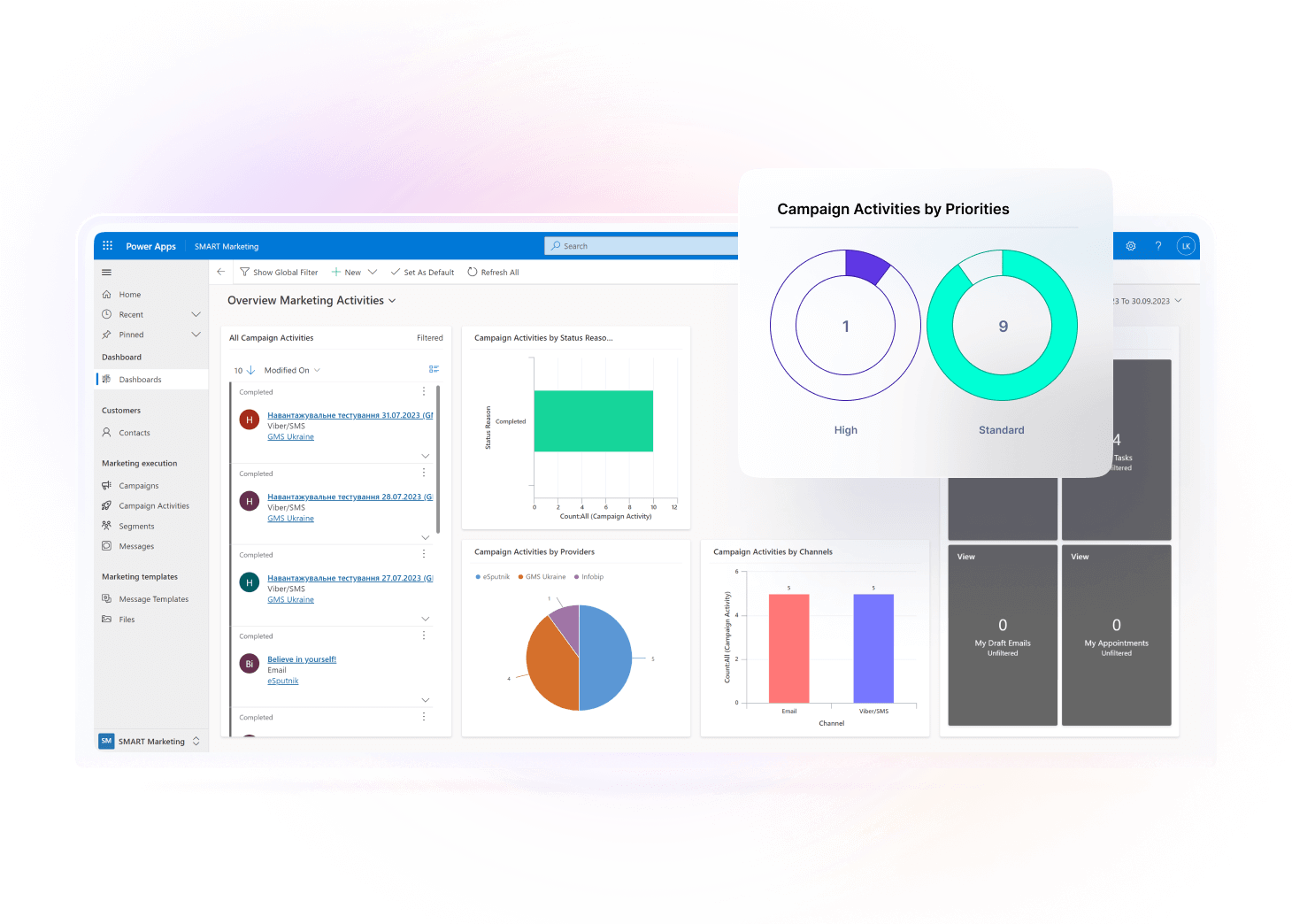
Another key advantage of the solution is the ability to connect relevant connectors and modules. Among them:
SMART Connector for Infobip
For mass and triggered SMS/Viber campaigns with analytics on their status and results.
SMART Connector for GMS
For mass and triggered SMS/Viber campaigns with analytics on their status and results.
SMART Connector for eSputnik
For mass and triggered email campaigns via eSputnik with analytics on their status and results.
And SMART Easy Bot module with a user-friendly interface for easy and comfortable management of Viber and Telegram chatbots.
In general, SMART Marketing solutions, as well as the entire SMART CRM platform, were created based on the needs and requests of local businesses, so if you are looking for a clear and flexible system, we recommend ordering a personal consultation. To do this, leave your request below: